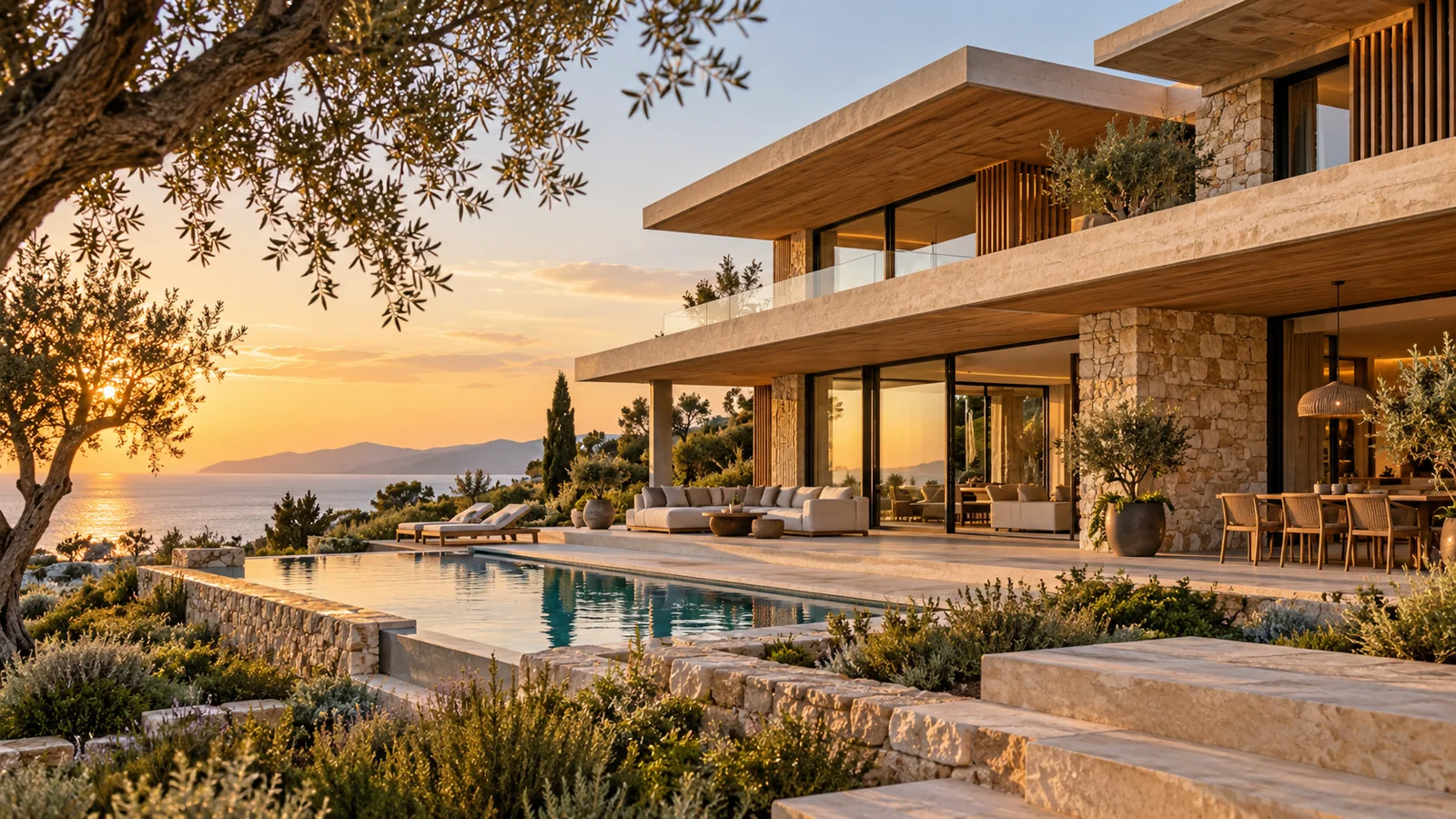
A well-designed home is more than an attractive building. It responds to its climate, controls daylight intelligently and supports the everyday habits of its occupants. In Izmir, where summers are hot and dry and winters are mild, architectural choices directly influence comfort and energy use.
1. Positioning the building on its site
Design begins with an analysis of the sun and prevailing winds. Living spaces should receive balanced daylight while avoiding excessive summer heat and benefiting from natural air movement. Neighbouring buildings, vegetation and topography must also inform the placement of the house.
2. Controlled daylight and effective shading
Large glazed surfaces can create generous interiors, but increasing glass alone is not a sound solution. Deep eaves, pergolas, vertical screens and recessed façades admit daylight while limiting direct solar gain. The result is a calmer quality of light and a more stable indoor temperature.
Climate-responsive design is not technology added at the end; it is a complete approach that begins with the first line of the project.
3. Openings that support natural ventilation
Windows and doors positioned opposite one another encourage cross-ventilation. Vertical spaces such as stairwells can help warm air rise and leave the building. These passive choices reduce dependence on mechanical cooling during spring and summer evenings.
4. Designing indoor and outdoor life together
Terraces, courtyards and gardens remain active living spaces through much of the year in Izmir. A strong connection between the living room and terrace, shaded outdoor rooms and landscaping conceived as part of the architecture all improve the quality of daily life.
5. Durable materials suited to the local setting
Natural stone, timber, mineral render and solar-resistant metal elements can form a timeless façade when detailed correctly. Materials should be evaluated not only by their appearance on day one, but also by their maintenance needs, ageing characteristics and resistance to coastal humidity.
6. Making energy efficiency part of the architecture
High-performance glazing, appropriate insulation, efficient climate systems and renewable energy are valuable. The best performance comes when these technologies work with correct orientation, compact planning and passive environmental strategies.
A home that belongs to its place
A home designed for Izmir is not a copy of a building conceived for another climate. It is an original response to the site’s light, wind and views, offering both privacy and openness. At Masis Construction, we unite aesthetics, technical performance and long-term value within one coherent design approach.